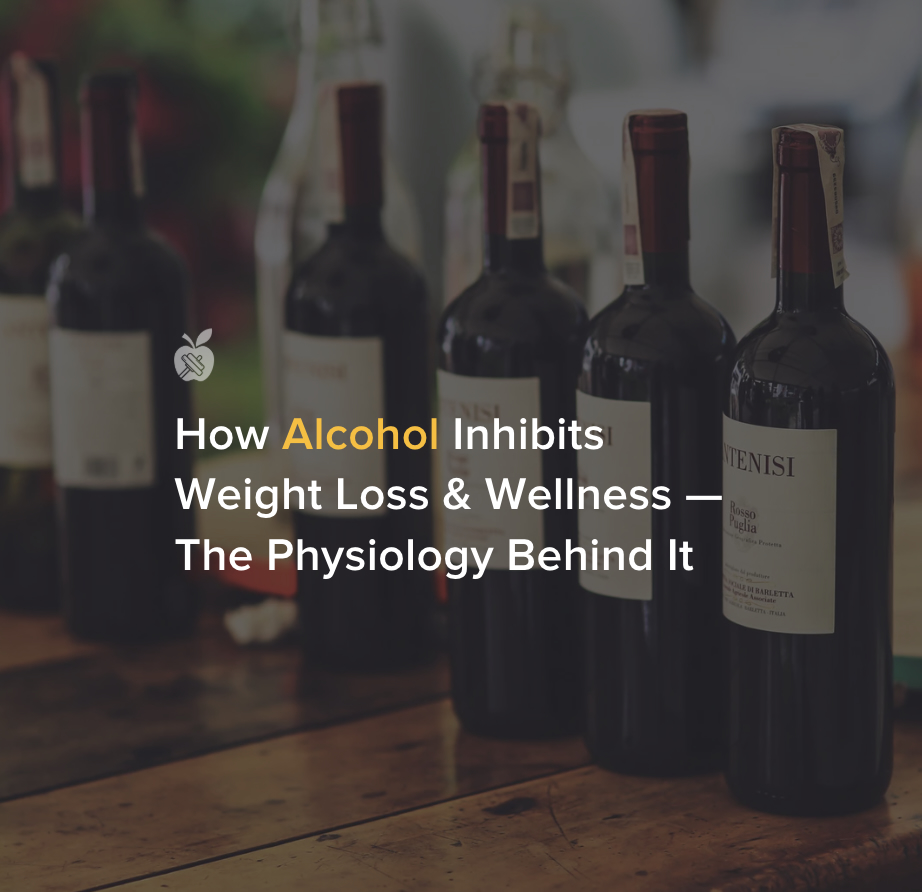

If you’re struggling to lose weight, improve your mental health, or feel better in your body — and you also drink, even just a couple of times a week — alcohol may be playing a bigger role than you realize.
Before we dive in, I want to be clear: this is a no-judgment zone. I’m not here to shame or lecture you — I’m here to share science-backed knowledge that can help you understand your body, take action, and actually feel better in your skin. Whether your goal is more energy, better mental health, or finally making progress on weight loss, this info is meant to empower you.
I also want to say this: if you are someone who drinks regularly – even just a little – it can seem ‘extreme’ to give it up. I get it, that was me once upon a time too.
Drinking is so woven into our lives, our social connections, and even our stress-relief rituals. Most of us were raised to see it as normal, harmless, and even healthy “in moderation.”
But the truth is… the research coming out today is clearer than ever:
Even small amounts of alcohol create measurable disruptions in metabolism, hormones, and mental health.
Studies are piling up showing that no amount of alcohol goes ‘unnoticed’ in the body — especially for anyone whose physiology is already compromised (for example, chronic stress, adrenal fatigue, or menopausal women with hormonal imbalances). The impact on metabolism and hormones — and the downstream consequences like weight gain, difficulty losing fat, low energy, and poor mental health — cannot be undone by proper nutrition or exercise alone.
That’s why so many people who drink even moderately struggle to see results, despite their best efforts.

That’s why I only take on clients who are willing to keep alcohol to a maximum of two drinks per week while we’re working together. I’m in the business of helping you achieve your goals — and continuing to drink can seriously interfere with your body’s ability to let that happen.
The good news? If you need practical strategies and tools to help cut back — from tasty non-alcoholic drink ideas to smart social hacks — I’m your gal!
Now, let’s dive into the science behind it.
Understanding exactly how alcohol disrupts your metabolism, hormones, and mental well-being gives you the power to take control. Once you see what’s really happening in your body, it’s no longer just a vague struggle — it becomes clear why results have been so elusive, and gives you the motivation and know-how to finally turn things around.
1. Alcohol Halts Fat Burning (Metabolic Prioritization)
Alcohol is treated like a toxin — and so your body works really hard to burn it off as fast as possible. It prioritizes metabolism of alcohol before anything else.
🔬 The science
When you drink, your liver converts alcohol into acetate.
Acetate can’t be stored, so your body prioritizes burning it first to get rid of it.
This halts fat oxidation — the breakdown of stored fat as energy/calories that the body burns constantly just to keep you alive. That means when you have alcohol in your system, your body is not burning calories at the normal resting rate it normally would.
Research shows:
- 1–2 drinks → ~30% drop in fat oxidation
- 3 drinks → 60–70% drop
- The effect lasts 4–12 hours, depending on genetics, sex, and liver speed
During those hours:
- Fat burning is paused
- Calories from food are more easily stored
- Your overall “calorie deficit” becomes misleading
Even modest drinking creates metabolic interruptions big enough to stall your weight loss progress — even if your diet is bang-on.
2. Alcohol Disrupts Hormones That Regulate Weight, Mood & Metabolism
A) Cortisol increases
There are human studies showing that alcohol consumption increases cortisol (the “stress hormone”).
- In a study where participants consumed a high dose of ethanol (1.75 g/kg), researchers observed a cortisol spike of 152% above control at 4 hours post‑consumption, with elevations lasting up to 24 hours. SpringerLink
- In a large observational study of nearly 9,000 people, greater alcohol consumption was associated with higher serum cortisol levels — the analysis estimated that each additional drink per day correlated with a rise of about 0.18 μg/dL in cortisol. PubMed
Higher cortisol =
- More abdominal fat storage
- More cravings
- Blood sugar instability
- Increased anxiety
B) Testosterone drops
Studies also show that just 2–3 drinks can reduce testosterone production temporarily, which harms:
- Fat loss
- Muscle retention
- Recovery
C) Estrogen increases
Alcohol interferes with the liver’s ability to clear hormones, causing your body to hold on to higher estrogen levels for longer, even if you eat “clean” and exercise. Here’s what studies show:
- 2 drinks: fat oxidation drops ~30% (metabolism slows) and estradiol levels begin to rise measurably.
- 3 drinks: estradiol increases more substantially; some studies show up to 60–70% reduction in fat oxidation and significant estrogen elevation for 4–12 hours post-drinking.
Sorry menopausal women – no, drinking will not help increase your estrogen naturally (nice try)! Although it temporarily raises estrogen, it simultaneously increases cortisol, reduces testosterone, and worsens insulin and metabolic health—making weight management, energy, and overall wellness harder in the long run.
D) Insulin spikes
Alcohol destabilizes blood sugar, which triggers:
- Hunger
- Fat storage
- Afternoon energy/mood crashes
3. Impairs Sleep Quality (Even One Drink)
Even if you fall asleep quickly, sleep quality deteriorates.
Alcohol:
- Suppresses REM
- Increases awakenings
- Raises nighttime heart rate
- Disrupts melatonin
- Causes dehydration
Next-day effects:
- Cravings
- Lower energy/mood
- Higher cortisol
- Reduced calorie burn
- Reduced mental capacity (willpower, motivation)
One poor night of sleep can reduce next-day energy expenditure by 5–20%.
4. Increases Appetite & Reduces Inhibitions
By altering ghrelin (hunger hormone) and leptin (satiety hormone), alcohol drives overeating.
Plus, it suppresses the prefrontal cortex — the part responsible for discipline and long-term thinking.
This leads to:
- Snacking
- Poorer food choices
- Late-night eating
- “Screw it” mentality
Even 1–2 drinks can cause 300–1000+ extra calories without noticing.
5. Worsens Anxiety & Depression
Many people drink to relax — but physiologically, it backfires.
🔬 The science:
- Alcohol boosts GABA briefly (relaxing), then rebounds by increasing glutamate (anxiety)
- It disrupts serotonin and dopamine
- It raises cortisol
- It inflames the gut and brain
- It worsens sleep
This is why “hangxiety” happens — and why long-term drinking worsens both anxiety and depression.
6. Impairs Recovery, Muscle Growth & Energy Levels
Alcohol:
- Reduces protein synthesis by ~20% (the process of rebuilding muscle tissue)
- Dehydrates muscle
- Interferes with recovery hormones (testosterone, growth hormone)
- Increases inflammation
- Slows glycogen restoration (carb storage in the muscles)
This means:
- Less muscle growth
- Less effective workouts (poor performance)
- More fatigue
- Slower progress
Even if you train consistently, alcohol quietly sabotages much of your efforts.
7. Damages Gut Health
Alcohol:
- Irritates the gut lining
- Disrupts the microbiome
- Slows digestive enzymes
- Increases inflammation
- Worsens IBS
Because many of our hormones and neurotransmitters are metabolized in our gut, a compromised gut =
- Slower metabolism
- Hormone imbalance
- Mood dysregulation
- Lower immunity
8. Impairs Decision-Making the Next Day
Due to dehydration, neurotransmitter disruption, and poor sleep, you experience:
- More cravings
- Lower motivation & discipline
- More emotional reactivity
- Lower stress tolerance
This is why “just one night out” often derails 2–3 days of nutrition and habits.
9. Alcohol Calories Are Metabolically Useless
Alcohol gives:
- 7 calories/gram
- No nutrients
- No recovery or metabolic benefit
It provides energy your body can’t use constructively — and forces the liver to burn it immediately, at the expense of fat burning.
10. Alcohol Reinforces the Reward Pathway
Alcohol lights up dopamine and opioid receptors in a way that:
- Makes you crave alcohol
- Makes you crave junk food
- Lowers impulse control
- Encourages overeating while drinking and the day after
This is neurochemistry — not lack of willpower.
The final scoop…
Understanding how alcohol affects your hormones, metabolism, and mental health puts you in the driver’s seat. If reading this sparked a few ‘aha’ moments, I hope your frustrations and stalled progress finally make sense.
I know it’s not easy — especially if drinking is a regular part of your life or woven into the time you spend with family and friends.
But here’s the truth: cutting back, even moderately, is likely one of the most powerful things you can do to transform your body and your health – especially if you’re already struggling with hormonal imbalances, weight gain, poor mental health, or have other metabolic symptoms. Omitting or significantly reducing your alcohol consumption will allow your body to start healing from the inside out, and function better so that it can finally respond to your nutrition and workouts the way it’s meant to – helping you feel vibrant, strong, and truly at home in your own body.

The entire contents of this website are based upon the opinions of Build Holistic Nutrition. Please note that Build Nutrition is not a dietitian, physician, pharmacist or other licensed healthcare professional. The information on this website is NOT intended as medical advice, nor is it intended to replace the care of a qualified health care professional. This content is not intended to diagnose or treat any diseases. Always consult with your primary care physician or licensed healthcare provider for all diagnosis and treatment of any diseases or conditions, for medications or medical advice, as well as before changing your health care regimen.

© BUILD NUTRITION 2026. ALL RIGHTS RESERVED. PRIVACY POLICY

Go ahead, creep us on social. You know you want to!